 Buraydah Private Colleges
To take our Students to Zenith of Education
Buraydah Private Colleges
To take our Students to Zenith of Education
Quick Links: Future Student Application | Education Gate | BlackBoard
Pharmacy Program
Pharmaceutics
Pharmaceutics is the discipline of pharmacy that deals with the process of turning a new chemical entity (NCE) or old drugs into a medication to be used safely and effectively by patients. It is also called the science of dosage form design

About the Department
Welcome to the Pharmaceutics unit at the Pharmacy program, College of Pharmacy and Dentistry, Buraydah Colleges. Since the beginning of the College of Pharmacy, the Pharmaceutics unit has significantly contributed to the college's undergraduate bachelor of pharmaceutical sciences program through offering core and elective courses in different areas of pharmaceutics and pharmaceutical microbiology.
Pharmaceutics is a multidisciplinary applied science concerned with delivering and maintaining appropriate drug concentrations at target sites in the body for appropriate times (thus, alleviating disease by optimizing drug effects over time). Our faculty members are distinguished scientists who mentor students, run active research labs, and contribute to the advancement of the pharmaceutics discipline.
Vision, Mission and Goals.
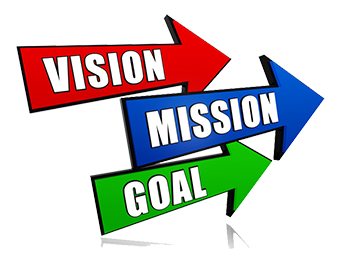

Vision
The department seeks to excel in pharmaceutical sciences education locally and regionally.

Mission
The Pharmaceutical Sciences Program is committed to offer high-quality education to its students, and provide community services in different professional pharmacy settings.

Goals
- To graduate a competent and confident pharmacist who has professional knowledge, skills and attitudes and able to contribute with other health care professionals to address the patient’s overall health care needs.
- To contribute to developing the health care system in Saudi Arabia and in particular the Qassim region through its students, staff and by providing professional community partnership, research, and educational services.
Head of the Department
Dr. Naseem Akhtar
Qualification
Ph.D. (Pharmaceutics)

Details
Email: naseem.Akhtar@bpc.edu.sa
Ext No. 319

Pharmacy Program
PHARMACEUTIC Department Courses
-
Pharmaceutics-1
PHT 224, Pharmaceutics-1, 3(2 + 1)
This course deals with the study of theoretical physical principles and their impact on pharmacy practice as well as the study of the principles of mathematics and nature and their applications in pharmaceutical sciences. This course will cover the following topics: fundamentals of measurement and pharmacy calculations, interpretation of prescriptions and how to calculate doses with them, cases of natural matter, dissolving and dissolving, flow and viscosity Surface tension phenomenon, persistence of pharmaceuticals and kinetics laws, osmotic pressure and buffer solutions, properties of collective solutions.
-
Pharmaceutics-3
PHT 322, Pharmaceutics-3, 3(2 + 1)
This course covers the foundations and technology necessary for formulating, preparing and evaluating solid pharmacy doses. Where the following topics will be studied: powders, physical properties and flow of powder, tablet design and manufacture, effervescent granules, preparation and manufacture of capsules and their evaluation, preparation of suppositories and their evaluation.
-
Industrial Pharmacy
PHT 432, Industrial Pharmacy, 4 (2 + 2)
The course deals with the basic pharmaceutical operations that take place in the pharmaceutical industry, as well as how to establish a pharmaceutical factory. These processes are grinding - mixing - filtering - centrifugation - extraction - the flow of heat in bodies and laws regulating this - cooling - drying - drying - evaporation - distillation - crystal. As well as how to manufacture some pharmaceutical dosages in the industry, and the course focuses in particular on the devices used in the pharmaceutical industry.
-
Pharmaceutical (QC) & (GMP)
PHT 436, QC and GMP, 3 (2 + 1)
This course is studied in cooperation between the departments of Pharmaceutics and Pharmaceutical Chemistry, where the teaching burden of the Department of Pharmaceutics represents two-thirds of the course and the Department of Pharmaceutical Chemistry the other third. The course aims to introduce students to the different methods of evaluating pharmaceutical preparations physically, chemically and biologically. It also aims to introduce the student to standard specifications and constitutional standards in manufacturing. As well as the principles of good industrial practice for the drug industry. As well as the work of quality tests for the final product and the work of quality tests in the industry for each step of production, and quality tests for the final product, and this evaluation includes all pharmaceutical doses such as tablets, capsules, suspensions, emulsions, and medications that are taken by injection, as well as paints, creams, and payloads.
-
Pharmacy Microbiology-1
PHT 226, Pharmacy Microbiology-1, 3 (2 + 1)
This course deals with the principles of microbiology from the composition of germs, viruses, and fungi. This course focuses on the way the microbial growth mechanism and the mechanism of disease induction and the study of microbes in terms of division, external description an anatomical description, nutrition and metabolism, biological construction, growth, and genetic properties, in addition to the foundations of immunity and viruses. This course will cover the following topics: Introduction to Biology Micro, division and classification of microbes, bacterial and anatomical description of bacteria, bacterial and bacteriological bacterial growth, bacterial genetics and acquired immunity, pathology of bacteria, introduction to virology, virus division and classification, synthetic and anatomical description of viruses, viral growth, viral genetics and acquired immunity, physical sterilization methods, chemical sterilization methods, disinfectants, and preservatives.
-
General Immunology
PHT 324, General Immunology, 2 (2 + 0)
This course includes an introduction to the foundations and principles of immunology, the anatomical description of the immune system (central lymphoid tissue, thymus gland, bone marrow stem cells, peripheral lymphoid tissue, lymph nodes, immune system cells, T cells and (B) cells). Fungal, acquired immunity and humoral and cellular immune response. The structure and functions of antibodies. System of histological compatibility and its relationship to immune responses. Complementary system and its effect on the defensive and pathogenic aspects. The motor media of the immune system and its effect on the defensive and pathogenic aspects. Defects in the immune system and contain: hypersensitivity diseases, autoimmune diseases, primary and secondary immunodeficiency diseases, immunity against cancerous diseases, immunology of organ transplants, immunity against bacterial diseases and immunological vaccines. A brief introduction about drug immunity and immunotherapy, immunosuppressant and their clinical use.
-
Nuclear Pharmacy
PHT 433, Nuclear Pharmacy, 2 (1 + 1)
This course is concerned with the principles of radiation pharmacy and radioactive drugs. As well as the use of nuclear radiation in the treatment of some diseases. The following topics will be addressed: Introduction to the nuclear pharmacy - Pharmaceutical radioactive material - Specifications of this material - The qualitative quality of these materials - The principle of nuclear pharmacy - Radiation regulation and prevention - Radioactive material uses for treatment and diagnosis - motility and radiation spread in the body.
-
Pharmaceutics-2
PHT 312, Pharmaceutics-2, 3 (2 + 1)
This course deals with the preparation of liquid and semi-solid pharmaceutical doses and for the pharmacy student to understand what these doses are, their types, how to prepare them, methods of use and their advantages and disadvantages. Therefore, the course contains the following topics: solutions - suspensions - emulsions - colloidal systems - fat pillows - nanoparticles - sprays - paints - creams - gels - pastes.
-
Pharmaceutics-4
PHT 414, Pharmaceutics-4, 3 (2 + 1)
The bio pharmacy is the science that studies the effect of the relationship between the properties of a physiochemical drug and its dose and its mode of administration on the rate and amount of drug absorption. This course is designed to familiarize the student with the effect of physiological factors that affect the absorption of the oral medication - physiochemical factors that affect the absorption of the oral medication - formulation factors that affect oral drug absorption - bioavailability and bioequivalence and the factors affecting them - Biopharmacy of non-oral doses - Study of biopharma of extended-effect doses - new systems for drug delivery and targeting.
-
Sterile dosing form
PHT 434, Sterile dosing form, 2 (1 + 1)
The contents of this course are designed to introduce students to the formulation of drugs that are used by injection and drugs that are used to treat the eye, as well as study the physiological properties related to them, the student is also introduced to the principles of sterilization and different techniques used in this field, also the course includes the manufacture of sterile preparations and includes different types of injection and medicines Al-Ain, the composition of these pharmacy doses, the basics of electrolyte and liquid therapy, and mixture of syringes, their repulsion, incompatibility with each other, and packaging of these preparations.
-
Pharmacy Microbiology-2
PHT 313, Pharmacy Microbiology-2, 3(2 + 1)
This course is an introduction to microbiology, which focuses on microbial composition. Where this course deals with the role of germs in causing diseases, general diagnostic laboratory description, methods of prevention and treatment and this course will cover the following topics: the characteristic of diseases of bacteria, methods of infection, symptoms of infectious diseases, diagnostic methods, prevention, treatment. As many common pathogenic bacteria will be studied.
-
Basic of Pharmacokinetics
PHT 415, Basic of Pharmacokinetics, 4 (2 + 2)
This course deals with introducing the student to the pharmacokinetics, where the focus is on eliciting, understanding, and using the following terms: filtering, the apparent distribution volume, the body’s disposition constant, and the vital half-life of the drug disposal. The study of determining the drug concentration in the blood and urine is also studied through the pharmacokinetic variables of the drug after a single dose or repeated doses by intravenous or oral administration, as well as after intravenous impregnation. Also, some important issues related to the release of medicine from the kidneys or liver, as well as the two-room model, are also studied.
-
Cosmetics
PHT 435, Cosmetics, 1 (0 + 1)
This course deals with the historical development of cosmetics as well as the types of these products as well as their various components as well as the laws of the Food and Drug Organization regulating the handling, installation, and manufacture of these products. The course also includes the identification of properties and composition of the skin. As for the practical course, it includes the preparation and evaluation of many cosmetics and how to do quality tests for them.
Members of the Department
-
Dr. Mohammad Makhmur Ahmad
-
Dr. Anzarul Haque
Dr. Anzarul Haque
Ph.D.
Assistant Professor
-
Mrs. Michel Santos
-
Dr. Sundos Suleman Ismail Abdalla
College LMS - Blackboard Ultra
-
BlackBoard Ultra - LMS
All Rights Reserved © 2020-25 Buraydah Private Colleges. This site is managed by the IT Center of Buraydah Private Colleges, Buraydah, Al-Qassim, Kingdom of Saudi Arabia.